Water Removal in Coney Island, NY
Not every Coney Island flood is the surge. A rooftop water tank overflows on a Surf Avenue high-rise, and the clean water runs down the stairwell and the shaft into the units and the basement mechanical room below. We pump it out and dry it.
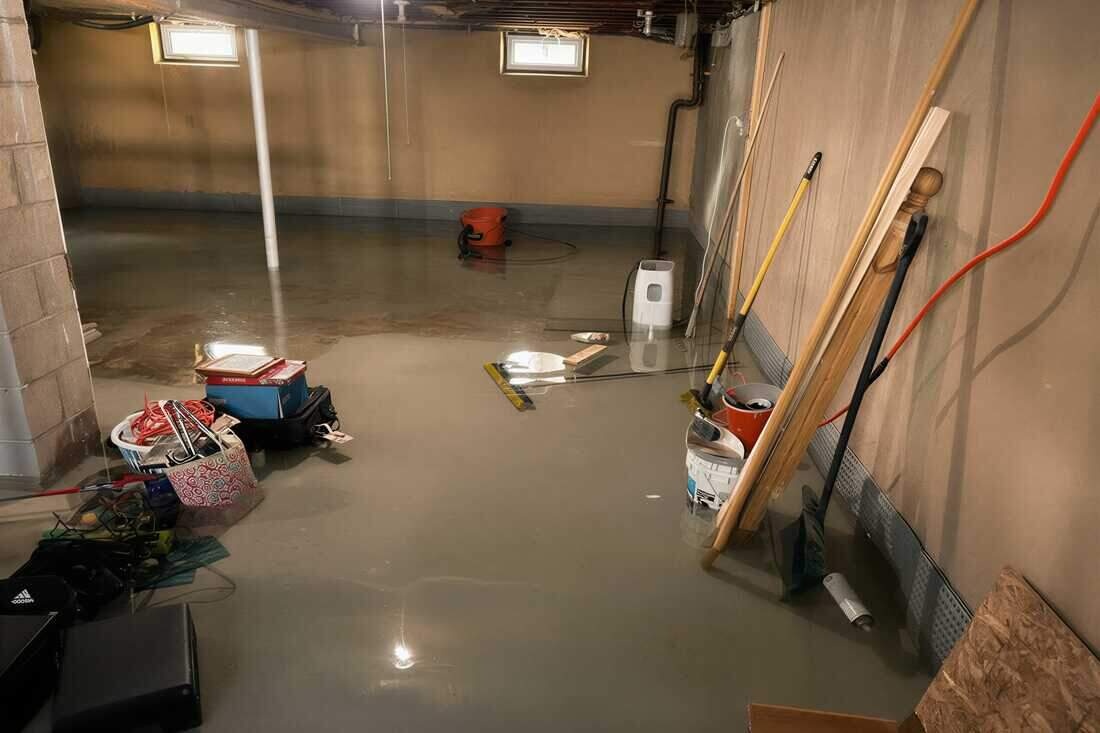
Water removal on the Coney Island peninsula comes from two very different directions, and telling them apart is the first job. The famous one is the coast: at sea level between the Atlantic, Gravesend Bay, and Coney Island Creek, a surge or a nor'easter pushes salt water up through the slab and over the grade, and every block here still sits in FEMA's highest-risk flood zone. The quieter one is internal and clean, the tank, riser, or supply line inside a Surf, Neptune, or Ocean Parkway high-rise that fails on its own and runs water down the stairwell and the mechanical rooms. Pulling that standing water out fast is what protects the units and the building systems below, and a real water removal company classifies the water before it decides how to handle it.
Reliable Brooklyn Water Damage Restoration works a flooded Coney Island building in one fixed order. Extraction leads: truck-mounted vacuums clear the standing water off floors, lobbies, and ground-floor units while submersible pumps drain a flooded mechanical room or a below-grade cellar. We test whether the water is clean, off an internal line, or contaminated, off a surge or a floor-drain backup, since the two run on different protocols. A moisture meter maps how far it wicked into the walls and the subfloor, then air movers and dehumidifiers run until the framing and the slab read dry on the meter, not dry to the hand. In an occupied tower we coordinate access with building management and log the loss unit by unit. A crew reaches the peninsula in roughly 40 to 45 minutes from a Brownsville base, longer when a storm has the avenues off the boardwalk underwater. Our emergency water removal services answer live, any hour; we document the loss, and your carrier decides what it covers.
What we cover in Coney Island
- Emergency water extraction — truck-mounted vacuums clear the standing water off lobbies, stairwells, and ground-floor units the moment the crew is in.
- Mechanical-room pump-out — submersible pumps drain the flooded below-grade cellars and mechanical rooms that take the water first in a Surf Avenue tower.
- Water-class testing on arrival — we sort a clean internal line from a contaminated surge or drain backup, because each one gets a different cleanup before drying.
- Moisture mapping — a meter reads how far the water wicked into walls and subfloor, so nothing hidden is left wet behind the drywall to grow mold.
Full detail on this service: Water Removal in Brooklyn · or see every water damage service we provide in Coney Island.
Common questions in Coney Island
A tank or a pipe inside my Coney Island building flooded my unit, not the ocean. Whose insurance is that?
An internal failure is a different question than a flood, and usually a better one for you. When a building tank, riser, or common line fails, the building's master policy generally answers for the pipe and the common structure, while your own HO-6 or renters policy covers your interior finishes and belongings, and the clean water off an internal line is exactly the kind of sudden loss those policies are written for. That's the opposite of a coastal surge, which standard policies exclude and only NFIP or private flood covers. We document the source, the path the water took, and the affected materials unit by unit so every carrier in that chain works from the same record. Call (347) 906-9419 and we'll get started.
The water ended up in the basement mechanical room. Is that more urgent than the flooded apartments?
It's urgent in a different way, and we treat it as its own priority. A flooded mechanical room threatens the building's boiler, electrical gear, and pumps, which is why we drain it fast with submersible pumps and get the space drying before corrosion sets into the equipment. If live electrical is submerged, that area stays clear until the utility or the building's electrician kills power to it. We extract the apartments and the mechanical room on the same dispatch, keeping the record separate for each so the building's claim and the unit owners' claims each stand on their own. In a tower, coordinating that across floors is most of what the call involves.
How do I know if the water in my unit is the clean kind or the contaminated coastal kind?
We test it on arrival, and the source usually tells the story. Water off an internal tank or supply line is clean Category 1, and caught fast it can often be extracted and dried with little removal. A storm surge or a floor-drain backup is Category 3: coastal surge mixes street runoff with sewage from overwhelmed drains, so it leaves bacteria and silt behind even after it dries, and it needs PPE, disposal of the porous materials it soaked, and an antimicrobial step before drying. Salt left in the structure also holds moisture and corrodes metal, so where salt water came in we flush it out. Don't move belongings back until the space is cleaned and dried to standard.
How fast can you reach a Coney Island tower, and what should I do first?
We answer 24/7 with a live person, no answering service, and a crew is usually on the peninsula in around 40 to 45 minutes from a Brownsville base, depending on traffic and which block you're on; a borough-wide storm that backs up the Belt Parkway and the avenues off the boardwalk stretches it, so call the moment you see water. If it's an internal tank or riser, you can't shut it from inside your unit, so tell the front desk or the super to close it at the main right away. Move what you can off the wet floor, photograph everything, and stay clear of wet outlets and any standing water near electrical gear.
Licensed, insured & trained to industry standards


Water running down a Coney Island tower? Call now.
A Brooklyn crew reaches the peninsula fast, any hour, with a live answer when you call. Standing water roughly doubles the damage it does for every hour it sits, so getting extraction going early keeps a flooded unit from turning into a gut job. We pump it out, dry the structure to a meter reading, and document the loss by unit for your claim. Call (347) 906-9419.
Call (347) 906-9419