Water Removal in Crown Heights, NY
A summer cloudburst loads the low yards behind a brownstone off Franklin Avenue, and the old drainage tile sends storm water at the foundation until it rises through the cellar floor. We drop in a pump, drain the standing water off the slab, and dry the foundation walls.
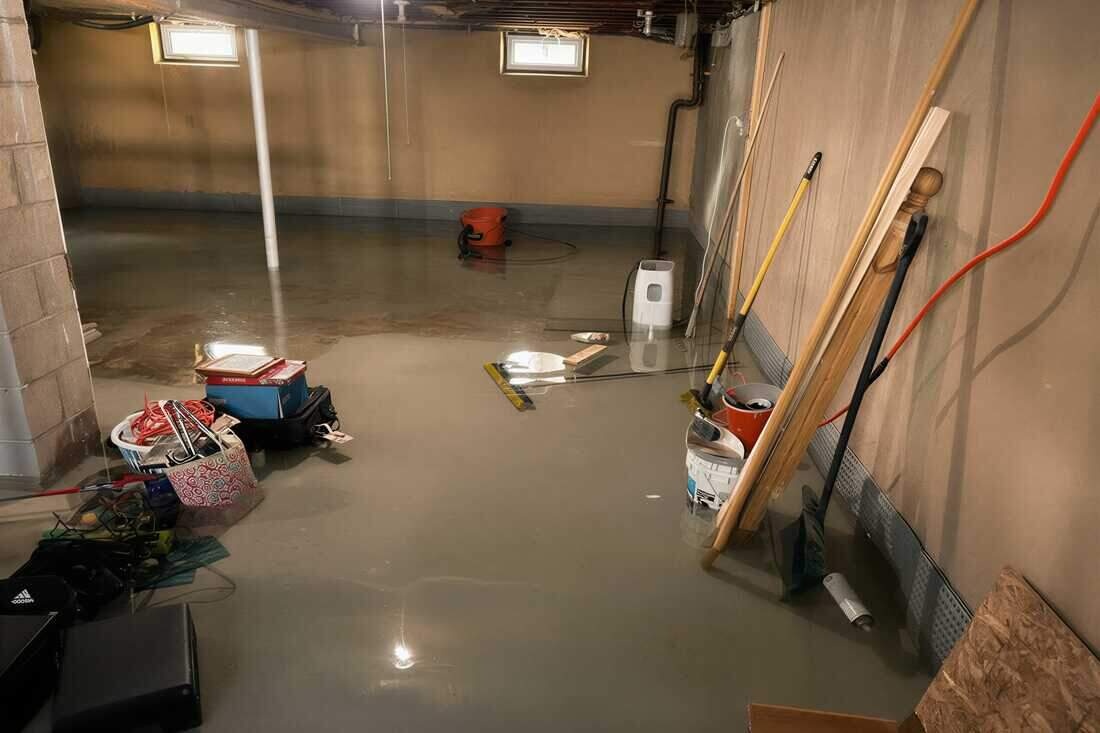
Crown Heights runs from landmarked brownstone and limestone rows in the Crown Heights North district to six- and eight-story prewar apartment houses that wall Nostrand, Bedford, and Franklin Avenues, and the building stock decides how a loss behaves. For the row-house owners, the trouble is often below grade: the low yards and century-old drainage tile behind the blocks near Eastern Parkway push storm water at the foundation, so a hard rain fills the cellar fast and again the next month. In the prewar apartment stock, one shared riser feeds a whole column of units off aging galvanized fittings, and when a fitting gives out the water tracks through the ceiling cavity and surfaces a floor or two below the break. Getting the standing water out of the affected space is the first move on either job.
Our water removal services start with pulling the water, then reading the wet you can't see. A submersible pump clears a flooded brownstone cellar while truck-mounted vacuums lift standing water off floors and stairwells before it soaks a prewar subfloor, and then meters and thermal imaging map where the water wicked along the ceilings, walls, and foundation, because trapped water in a prewar cavity grows mold within a day or two. We work out of a Brownsville base, so plan on roughly 45 minutes to your block depending on traffic, with a live person on the phone the whole time, never an answering service. We log the source, the readings, and what we haul so your building or your carrier has the record, then the same crew dries the structure to a meter reading and puts the room back. We document the loss; your carrier decides what it covers.
What we cover in Crown Heights
- Brownstone cellar pump-out — submersible pumps clear the flooded below-grade cellars common under the older blocks off Eastern Parkway.
- Standing-water extraction — truck-mounted vacuums lift water off floors and stairwells before it soaks into a prewar subfloor.
- Cavity moisture mapping — meters and thermal imaging show where riser water wicked along ceilings and walls, so the hidden wet zone gets dried too.
- Foundation-wall drying — block and masonry hold moisture long after the floor looks clear, so we meter and dry the walls to a reading, not to the eye.
Full detail on this service: Water Removal in Brooklyn · or see every water damage service we provide in Crown Heights.
Common questions in Crown Heights
My brownstone cellar floods every heavy storm, and this time the water smells. Is what you pump out treated the same either way?
Not always, and the smell is the tell. Storm water that soaked in low through the foundation and the mortar joints is usually gray, but if the older combined sewer under the avenues surcharged and pushed up through the floor drain, that is Category 3 black water and a real health risk. We test it on arrival: a sewer backup gets extracted in PPE with the porous materials it soaked bagged and hauled, while clean groundwater seepage caught fast we can often pump, dry, and disinfect with far less removal. Don't run a wet-vac in water you're not sure of. Call (347) 906-9419 and we'll sort which it is on site.
My ceiling is soaked but the apartment right above me is dry. How do you even find where the riser water is?
In a prewar building the shared riser runs through every unit's wall, so a failure two or three floors up rides the plumbing chase down and surfaces wherever it finds the lowest exit, which is often not the unit directly overhead. We trace the actual wet path with thermal imaging and a moisture meter rather than guess from the stain, pull the standing water, and map how far it wicked along the ceiling and into the walls beside it. That mapping is also what tells the building which stack to open, since the source decides whose repair the pipe is.
What should I do between calling you and the crew reaching my block near Eastern Parkway?
We run out of Brownsville, so figure about 45 minutes to most Crown Heights addresses in normal traffic, day or night, answered live the whole time. While we roll, if the leak is a pipe and still running, shut the water at the valve or the main if you can reach it safely. For a flooding cellar, stay out of standing water that's near the panel, the furnace, or any outlets, and don't try to pump it yourself if you can't tell whether it's clean. Lift what you can carry up off the floor and photograph the water line before anything moves.
The riser that flooded my unit belongs to the building, not me. Who documents the loss for the claim?
We do, and we write it so each side has its own file. When a shared riser fails, the building's policy generally answers for the pipe and the common structure, while your own renters or unit-owner policy covers your belongings and interior finishes; the coverage call is always the carrier's, not ours. Our part is the record both need: the source pinned to the floor above, the rooms affected, dated photos, and the moisture readings, logged under your address so it stands alone. We document the loss; your carrier or the building's decides what each one covers.
Licensed, insured & trained to industry standards


Flooded cellar or a soaked ceiling in Crown Heights? Call now.
Call and reach our own crew live, any hour. We pump and extract the water, dry the structure and foundation walls to a meter reading, and document every step for your building or your insurer. (347) 906-9419.
Call (347) 906-9419