Water Removal in East New York, NY
A pipe in the uninsulated wall of a Cypress Hills cellar freezes in a January cold snap and splits when it thaws, and clean water pours over the basement below. We answer live, drop in a pump, pull the standing water off the slab, and dry it out.
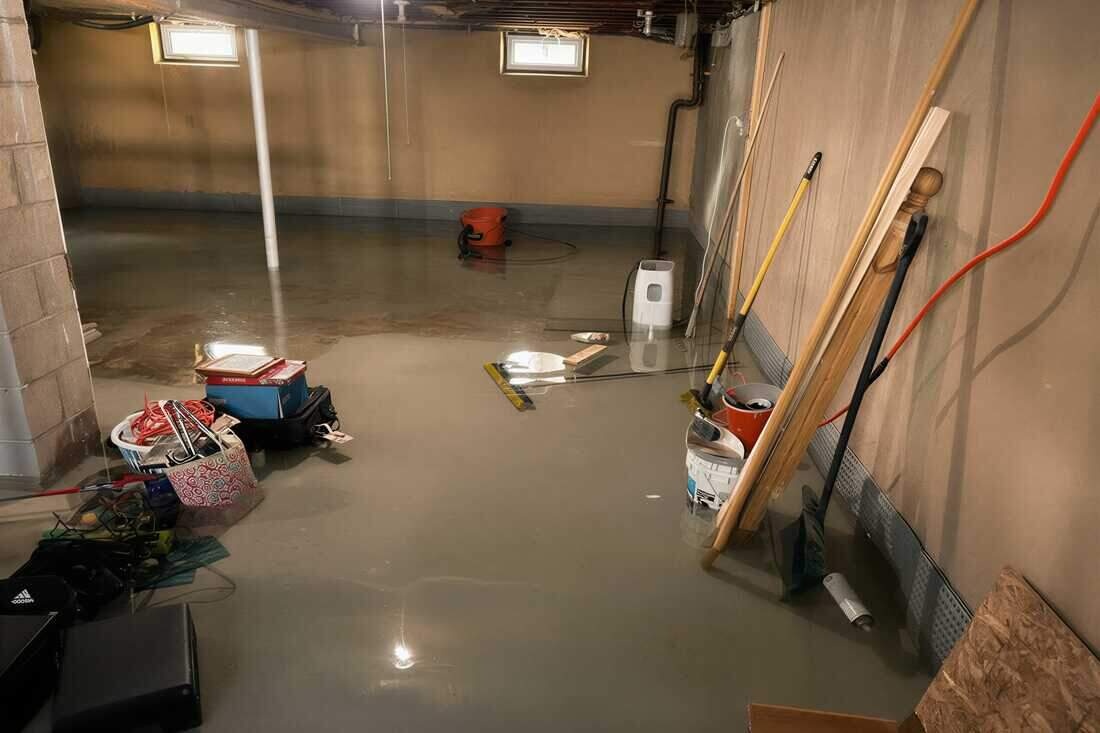
Water removal in East New York almost always means a basement, because most of the one- and two-family brick and frame houses off New Lots, Pennsylvania, and Dumont Avenues finished the lowest level into a rec room, a rental, or a den. Two things flood it. In winter, a pipe running an uninsulated exterior wall or an unheated cellar freezes through on a cold snap and splits when it thaws, and because these houses sit on platform framing, that clean water rides the studs and joists sideways and down before a stain shows. In a hard rain, the aging combined sewer under the low blocks around Cypress Hills surcharges and shoves a mix of storm runoff and sewage back up through the basement floor drain. Getting the standing water out fast is the one step that cannot wait.
Our water removal services run in a set order, and the first move is telling the two kinds of water apart. Clean water from a burst supply line gets extracted and dried in place where it caught fast; a sewer backup is Category 3 black water, contaminated from the first inch, so we arrive in PPE, extract and dispose of it, and bag the carpet, pad, and lower drywall it soaked rather than dry them. A submersible pump drops the standing water off the slab, truck-mounted vacuums lift what wicked into the finished floors and framed lower walls, and a moisture meter maps how far it traveled so nothing stays wet behind the drywall. We load at a Brownsville base that shares East New York's western line along Van Sinderen Avenue, so on a normal run a crew is rolling within roughly 45 minutes, traffic depending, and a real person answers at any hour. We log the source, the depth, and everything we haul; we document the loss, and your carrier decides what it covers.
What we cover in East New York
- Submersible deep-water pump-out — drops the standing water in flooded below-grade cellars and finished basements first, before extraction begins.
- Truck-mounted extraction — high-vacuum units pull the rest out of carpet, pad, and slab so it dries instead of sitting against the framing.
- Framed-wall moisture mapping — meter readings find where clean water rode the platform studs and joists sideways, so nothing stays wet behind finished walls.
- Sewage-water handling — when the combined sewer backs up, we treat it as Category 3 with PPE, antimicrobial, and proper disposal of what it soaked.
Full detail on this service: Water Removal in Brooklyn · or see every water damage service we provide in East New York.
Common questions in East New York
A pipe in my cellar froze and split, and now clean water is all over the finished basement. Can that be dried without ripping the level out?
Usually, if the call comes in while the water is fresh. Platform-framed houses like these let a wall-line break drop through the stud bays and ride the joists, so what pools in the basement is the low point of a wider wet zone. Rather than strip the level, we chase the meter: the bays that read wet get opened, the ones that read dry stay closed, and drying gear runs in the cavity until the numbers come down. Fresh, clean water caught the same day is the best case there is for saving a finished lower level. Shut the water at the main if you can reach it, then call (347) 906-9419.
My East New York basement flooded after a heavy rain and the water smells foul. Is that sewage, and do you handle it?
Probably, and yes. When the combined sewer around Cypress Hills surcharges in a hard rain, sewage-mixed water is what pushes up through the floor drain, and that makes it Category 3 contaminated water. It needs different handling than a clean flood: protective gear, extraction and disposal, antimicrobial treatment, and removal of the porous materials that drank it up. Don't run a shop vac in it yourself. We assess it on arrival and walk you through what the extraction and cleanup involve before any work starts.
Does my homeowners policy pay for a frozen pipe that burst, or does it fault me for the cold?
A sudden burst from a frozen pipe is one of the losses a standard homeowners policy is most likely to answer, so long as the house was reasonably heated; some policies do push back if the heat was left off in a vacant house through a freeze. That is different from a storm backup through the floor drain, which usually needs a separate sewer-and-drain endorsement, and from groundwater seepage, which a standard policy typically excludes. We don't rule on coverage and won't promise what yours pays. What we do is pin down the source, record the water category, and log the scope with dated photos and moisture readings so your adjuster works from facts.
You're based in Brownsville, right next door. How fast can you reach East New York?
Brownsville shares East New York's western edge along Van Sinderen Avenue, so the crew isn't crossing Brooklyn to reach you, which means on a normal run a truck is rolling within roughly 45 minutes, though traffic and the job ahead of yours still set the real clock. A live person answers any hour at (347) 906-9419, never an answering service. On that call we tell you what to do before we arrive, like cutting power to the basement if it's safe to reach the panel, and keeping off the wet flooring so it doesn't track further.
Licensed, insured & trained to industry standards


Flooded basement in East New York? Call now.
A live person answers any hour, and a Brooklyn crew heads out from Brownsville right next door. We classify the water, pump it out, dry the framing to a meter reading, and document every step so your carrier has what it needs. Call (347) 906-9419.
Call (347) 906-9419