Water Removal in Park Slope, NY
A freestanding tub overflows on the top floor of a Montgomery Place brownstone while the water's left running, and it soaks down through two plaster ceilings onto the parlor-floor oak below. We get it off the boards fast, before the strips start to cup.
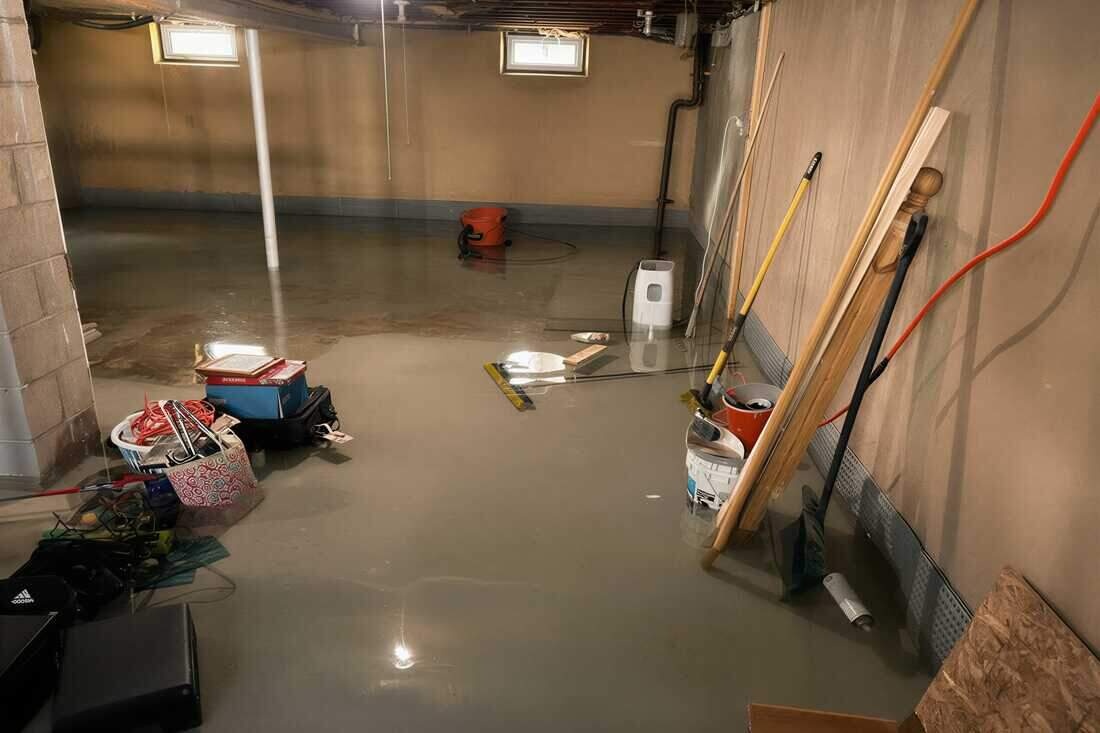
Water removal in Park Slope is usually a race to save old wood. The brownstone and limestone rows from Prospect Park West down to Fourth Avenue went up between the 1880s and 1910s, and the narrow-strip oak and heart-pine inside them cup and crown within hours once water sits on the surface. An overflow or a failed line two floors up doesn't stay put either — it rides the joist bays and drops through plaster-and-lath onto the parlor floor a room away from where it started. Pulling the standing water off those boards fast is the whole job, and a real water removal company reads how far it traveled before it commits to what has to come out.
Reliable Brooklyn Water Damage Restoration works it in a fixed order. Truck-mounted vacuums lift the standing water off the hardwood while a submersible pump clears any below-grade cellar that took water, then a moisture meter maps the plaster, the wall bases, and the subfloor so nothing saturated is left to dry on its own. On original flooring we set injection mats that draw moisture up through the wood from below while air movers work the surface, buying the boards a real chance instead of defaulting to replacement. Our water removal services stay on it until a meter says the wood and the framing are dry, not until they feel dry to the hand. A crew reaches most of Park Slope in roughly 45 minutes from a Brownsville base, traffic depending, and a live person answers day or night, never a service. We log the source and every reading; we document the loss, and your carrier decides what it covers.
What we cover in Park Slope
- Truck-mounted extraction — high-volume vacuums pull the standing water off parlor-floor oak and heart-pine before it wicks down between the strips into the boards.
- Injection-mat floor drying — mats draw moisture up through original hardwood from below while air movers work the top, so the boards dry in place instead of coming up.
- Plaster-cavity mapping — we meter how far the water rode the joist bays and soaked the plaster-and-lath, so the wet you can't see behind the ceiling gets dried, not sealed in.
- Below-grade pump-out — submersible pumps clear the standing water from the finished cellars and playrooms dug out under Slope row houses.
Full detail on this service: Water Removal in Brooklyn · or see every water damage service we provide in Park Slope.
Common questions in Park Slope
A tub overflowed upstairs and ran onto my parlor-floor oak. Is that water going to ruin the boards?
Not always, but the window is measured in hours. An overflow off a tub or a sink is clean water, so the threat is the wood, not contamination: narrow-strip old-growth oak drinks moisture unevenly and starts to cup and crown as it swells. Get the water off within hours and there's a real chance to dry the boards in place with injection mats instead of replacing flooring that has no modern match. Left overnight, the odds drop and the cupping can lock in. Keep everyone off the wet boards so they don't press moisture deeper, and call (347) 906-9419 now, because every hour narrows the options.
The stain shows on my parlor ceiling, but the leak was in a bathroom on the far side of the house. How do you know where the water actually went?
Because in these houses the stain marks where the water finally broke through, not where it came from. The rows were repiped piecemeal over the decades, so lines often run sideways through the joist bays instead of straight down, and the water travels along the framing and drops wherever it finds a gap. We read the actual wet path with a moisture meter and a thermal camera rather than guess from the mark, which regularly puts the real saturation a room or two off from the ceiling stain. Then we open only where the readings say the water traveled and dry that cavity, leaving the sound plaster alone.
Can the plaster-and-lath ceiling that got soaked be dried, or does it all have to come down?
It depends on how saturated it is, and we don't gut it on sight. Original plaster holds water differently than modern drywall, so we meter the ceiling and the cavity above to see how deep the moisture actually runs. Plaster that's only surface-wet can often dry in place once we get airflow and gentle heat into it, and where a ceiling still carries a medallion or a run of cornice we dry it through small access cuts wherever the readings allow. Plaster that's gone soft, lost its key from the lath, or bulged under the weight of the water has to come out for safety. Either way we photograph and log it before anything is opened.
Will my homeowner's policy cover the water removal, and does it matter that the tub was left running?
A sudden accidental overflow is one of the losses a standard homeowner's or HO-6 policy is most likely to answer, and an unattended tub that overflowed generally still reads as sudden and accidental rather than neglect, though a carrier may look at the circumstances. That's different from groundwater or storm water pushing into a below-grade cellar, which a standard policy typically excludes without a backup endorsement. We don't rule on coverage or promise what yours pays. What we do is pin the source, log the water category, and record the scope with dated photos and moisture readings so your adjuster works from facts. We document the loss; your carrier decides what it covers.
Licensed, insured & trained to industry standards


Water soaking a Park Slope parlor floor? Call now.
A Brooklyn crew rolls to the Slope any hour, and the phone is answered live, not by a service. Original oak cups within hours of the water sitting, so the sooner we're on it, the more of the floor comes back. We pump and extract the water, dry the boards and framing to a meter reading, and document the loss for your carrier. Call (347) 906-9419.
Call (347) 906-9419