What to Do After Water Damage in Brooklyn: First 24 Hours
Stop the water at its source, then photograph everything before you touch it. Mold can start in 24 to 48 hours, so how fast the structure dries decides how much you lose. Here's the order to work in, and when to call a crew.
Short answer: stop the source, make the area safe, photograph the damage for your insurer, and start drying. The clock that matters most is mold, which can take hold in a day or two, so the faster the structure dries, the less you lose. Below is exactly what to do after water damage, minute by minute through the first day.
These are the water damage restoration tips a crew would give you over the phone while it's on the way. We've laid them out as a plain checklist you can follow: what to do in the first five minutes, the first six hours, and across the first 24 — plus the mistakes that quietly make a loss worse, and the point where drying it yourself stops being safe and it's time to call a water damage restoration company. Work top to bottom.
First 5 minutes: safety & shutoff
Before anything else, deal with the two things that hurt people: live electricity and the water that's still coming in.
- Shut off the water source. If it's a burst pipe, an overflowing appliance, or a fixture, close its valve. Can't find the source? Shut off the main. In a lot of older Brooklyn row houses and brownstones, the main shutoff sits in the cellar near the front wall, by the water meter on the street side.
- Cut the power to the affected area, but only if you can reach the breaker without standing in water. If water is near outlets, the panel, or appliances, kill that circuit before you step in. Wet hands and electricity don't mix; when in doubt, stay out and call an electrician.
- Get people and pets clear of any room with a sagging ceiling, standing water, or an electrical hazard. A bulging, dripping ceiling can collapse — leave it alone.
- Put on boots and gloves before you re-enter. Even clear-looking water can carry bacteria, and you won't always know what it picked up on the way down. If the water is sewage or came up a drain (Category 3), don't wade in at all — it carries pathogens that a mask and gloves won't stop. Stay out and let a crew handle it in containment gear.
Hours 1–6: stop the spread
Water keeps moving and wicking into materials for hours. This window is about getting it out and limiting what it ruins.
- Document everything first. Before you move a thing, take wide and close photos and a short video of every wet area, the source, and damaged belongings. This is your insurance evidence, and you can't recreate it once it's cleaned up.
- Remove standing water with a wet/dry vac, towels, or buckets. The sooner it's gone, the less soaks into subfloor and drywall.
- Move what you can save. Lift rugs, furniture, electronics, books, and anything of value onto a dry, hard-floored room. Slide foil or wood blocks under furniture legs to stop staining the carpet.
- Start air moving. Open windows if it's dry outside, run fans, and set up a dehumidifier. Air movement is what stops mold while you wait for a crew.
- Call your insurer and a restoration company. Most policies require prompt notice, and a pro has moisture meters that find water you can't see inside walls and floors.
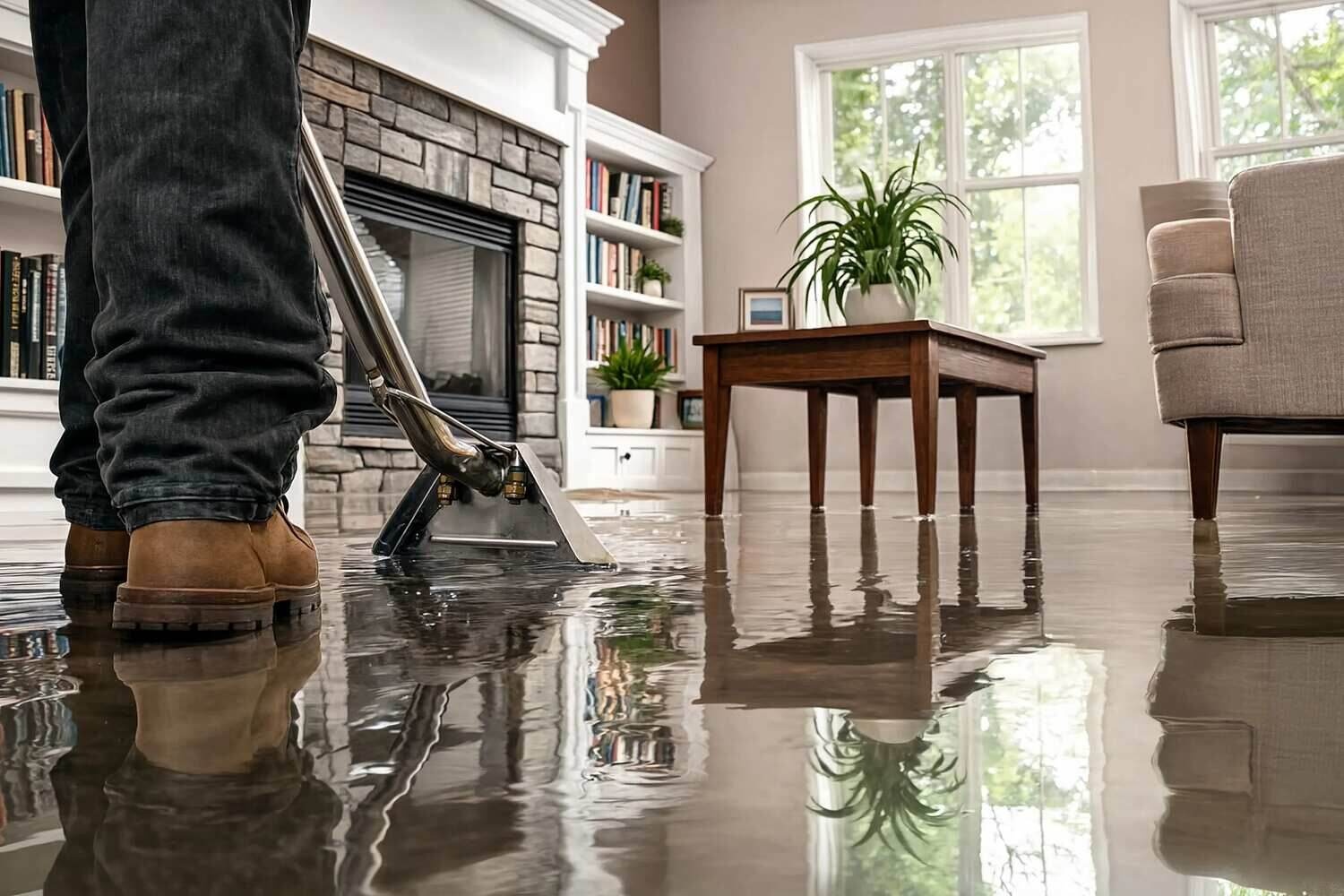
The first 24 hours checklist
Print this or screenshot it. In order, here's the full water damage cleanup sequence for day one:
| When | Do this |
|---|---|
| Minute 0–5 | Shut off the water source (or the main). Cut power to wet areas if safe. Get everyone out of hazardous rooms. |
| Minute 5–30 | Put on boots and gloves. Photograph and video everything before touching it. |
| Hour 1–3 | Remove standing water. Lift and relocate valuables, rugs, and furniture to a dry room. |
| Hour 1–6 | Set up fans and a dehumidifier. Open windows if outside air is dry. |
| Hour 1–6 | Call your insurance carrier and a restoration company. Keep all receipts for emergency expenses. |
| Hour 6–24 | Keep drying. A pro takes moisture readings, sets professional drying equipment, and checks for hidden water in walls. |
If the water was sewage, came from outside flooding, or covers more than a small area, skip the DIY drying and call a crew first. Those need containment and gear most homeowners don't have.
What NOT to do
A few common reactions make the loss worse or put you at risk. Don't do these:
- Don't walk into standing water near electricity. If you can't cut the power safely from a dry spot, wait for an electrician or the crew.
- Don't use a household vacuum to suck up water; use a wet/dry vac. A regular vacuum can shock you or fry the motor.
- Don't point box fans at sewage or Category 3 water. Blowing air across contaminated water aerosolizes bacteria and pushes it through the rest of the house. That water gets contained and extracted, not fanned dry.
- Don't rip out wet drywall blind. It's tempting to start tearing out soaked walls, but there's wiring, plumbing, and sometimes asbestos in older Brooklyn plaster behind them. Let the crew cut controlled flood cuts; opening a wall wrong turns one repair into three.
- Don't throw out damaged items before documenting them. Your adjuster needs to see them; photograph first, then set aside.
- Don't assume a dry surface means dry. Water hides in subfloor, wall cavities, and insulation, and that's where mold starts. Only a moisture meter confirms it.
- Don't wait it out. Mold can take hold in 24–48 hours. The longer water sits, the more material has to come out instead of being dried and saved.
When to call a pro vs. DIY
A small, clean-water spill caught fast is something you can handle. Anything bigger, dirtier, or older needs a crew with extraction, drying equipment, and moisture monitoring. Here's the line:
| You can DIY if… | Call a pro if… |
|---|---|
| Clean water from a known source (supply line, sink overflow) | Sewage, drain backup, or outside flood water (Category 3 — contaminated) |
| One small area, caught within an hour or two | Multiple rooms, a finished basement, or water that sat overnight |
| You can fully dry it in a day with fans and a dehumidifier | Water got into walls, ceilings, hardwood, or insulation |
| No electrical hazard and no structural concern | Sagging ceiling, electrical risk, or any sign of mold |
When in doubt, have it checked. A moisture-meter reading is the only way to know whether the structure under the surface is truly dry, and getting it wrong is what turns a one-day dry-out into a mold job weeks later. Reliable Brooklyn Water Damage Restoration runs on call 24/7 out of Brownsville, and a real person answers the phone, not an answering service. From there, see water removal for extraction, mold removal if it's already started, and restoration cost for what the work runs in Brooklyn.
Can it be fixed, or is the damage permanent?
Yes — water damage can be fixed in almost every case, as long as it's dried fast. Soaked drywall, warped hardwood, stained ceilings, and swollen subfloor all come back with extraction, structural drying, and targeted repair. That's the whole job. What decides whether something is saved or replaced is how long it stayed wet: material dried within a day or two usually survives, while material that sat for a week has often warped, delaminated, or grown mold and has to be cut out. So the honest way to get rid of water damage isn't a product or a trick — it's speed, the right meters, and dry-to-standard readings before the walls go back.
Two cases sit at the edges. A finished cellar under two feet of standing sewage may cost more to restore than it's worth, and a technician will tell you straight when replacement beats repair. And if you're buying a house with water damage, or a home with a stain you weren't told about, get it metered before you close — a surface patch of paint can hide months of wicking and mold in the cavity, and what looks cosmetic is often structural. When you're unsure who to call for water damage like that, an IICRC-certified crew can read the moisture behind the wall and tell you what's actually there versus what a coat of primer is covering.
Does insurance cover it?
It depends on what caused the water. Sudden and accidental damage, like a burst pipe, an overflowing washing machine, or a storm-driven leak, is often covered by a homeowner's or renter's policy. Gradual leaks (a slow drip you let go) and flood (rising surface water from outside) are usually not covered by a standard policy; flood needs separate flood insurance. You'll owe your deductible, commonly $500 to $2,500.
Your documentation is what carries the claim, which is why the photos from your first hour matter so much: wide and close shots of every wet area, the source, and every damaged item, plus the receipts for anything you bought to stop the spread. Keep the damaged items until the adjuster has seen them. Reliable Brooklyn Water Damage Restoration then documents the loss room by room with moisture logs, writes the scope, and bills your insurer directly — but your carrier is the one that decides what the policy pays. We supply the evidence; we never promise an outcome from someone else's underwriter. For the full walkthrough, see water damage insurance claims.
How long do I have before mold starts?
Mold can begin growing in as little as 24 to 48 hours on wet materials, and faster in a warm, humid space. That's why drying speed matters more than anything else: the goal is to get the structure dry before mold gets a foothold.
Who do I call first after water damage?
For anything beyond a small clean spill, call an IICRC-certified water damage restoration company. They have the extraction and drying equipment to stop the spread, and they document the loss for your claim. Reliable Brooklyn Water Damage Restoration runs 24/7, and a real person picks up, not an answering service. Also notify your insurer promptly, since most policies require it. If water is near electricity, an electrician comes first.
How fast can someone actually get here?
From our Brownsville base, we usually reach most of Brooklyn in around 45 minutes, depending on traffic and exactly where you are; the other boroughs take longer. That's an estimate, not a promise, but the point stands: the sooner extraction and drying start, the less water soaks into subfloor and framing. Call (347) 906-9419 as soon as the area is safe.
Should I move out while it dries?
Usually no for a contained job. The drying equipment runs while you stay. But leave any room with a sagging ceiling, an electrical hazard, or sewage contamination until a crew makes it safe. A technician will tell you which areas to avoid and for how long.
Water damage right now? Call Brooklyn's 24/7 crew
The first hours decide how much you lose. Reliable Brooklyn Water Damage Restoration can have a technician on the way to extract the water, dry the structure with our own equipment, and document the loss for your claim. We answer the phone 24/7, and a real person picks up.
Call (347) 906-9419